


The full process is below, with the calendar and what to have ready on emissions.
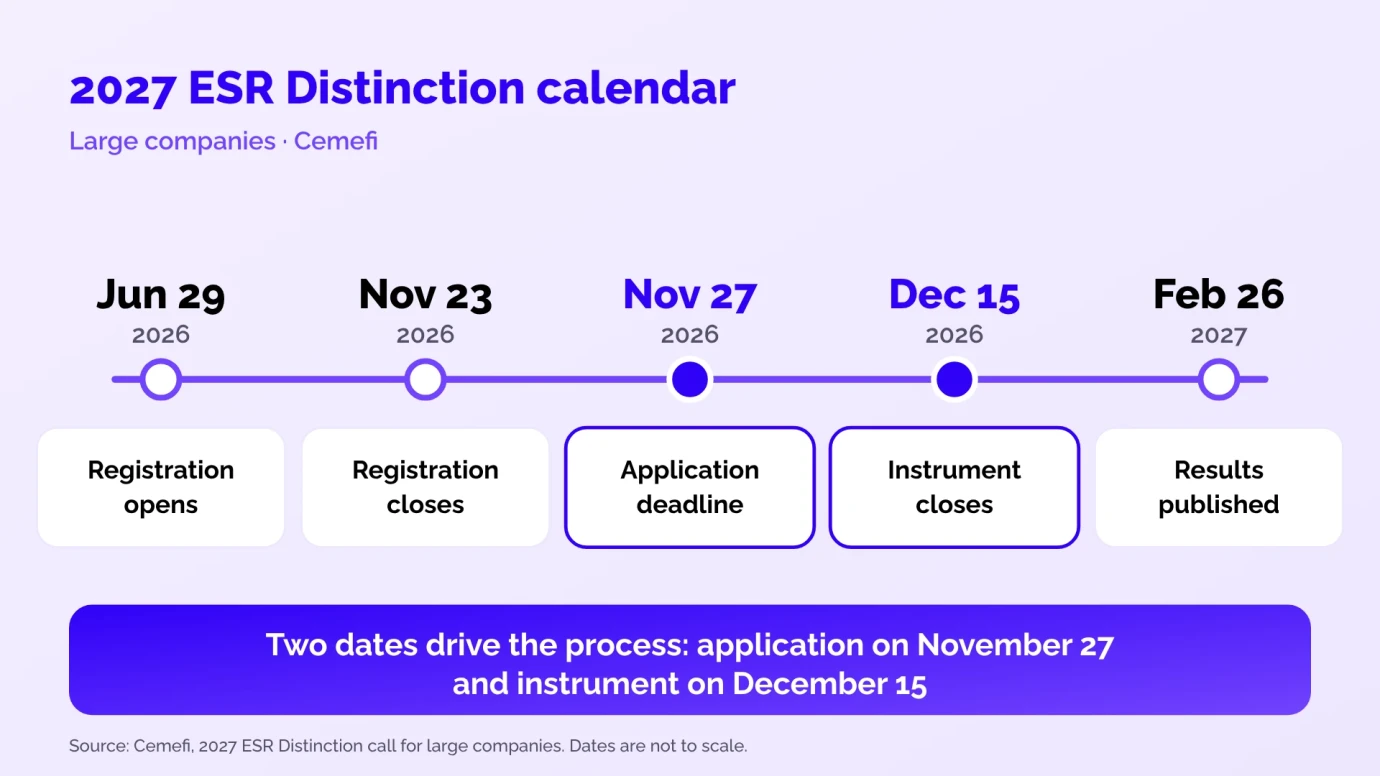
The deadline to apply a large company for Cemefi's 2027 ESR Distinction, which many teams search for as ESR certification, expires on November 27, 2026. After that date, the assessment instrument remains, and it closes on December 15. That is where the real problem shows up: the sustainability team needs evidence, and emissions evidence rarely lives in one place.
Electricity consumption sits in Maintenance, fuel in Logistics and supplier data in Procurement. Nobody gathered them before because no area owned the full inventory.
This article answers four questions. What ESR certification is and why it matters to an industrial company. How much it costs and what the 2027 calendar is. How to prepare the emissions evidence the Distinction asks for.
ESR certification is Cemefi's ESR Distinction: an assessment, with evidence review, of the level of development of a company's social responsibility practices.
Cemefi, the Mexican Center for Philanthropy, created it in 2001 as a tool for companies to take social responsibility and sustainability actions. ESR stands for Empresa Socialmente Responsable (Socially Responsible Company). In its calls, Cemefi uses the name Distintivo ESR, so it is worth searching for it with both terms.
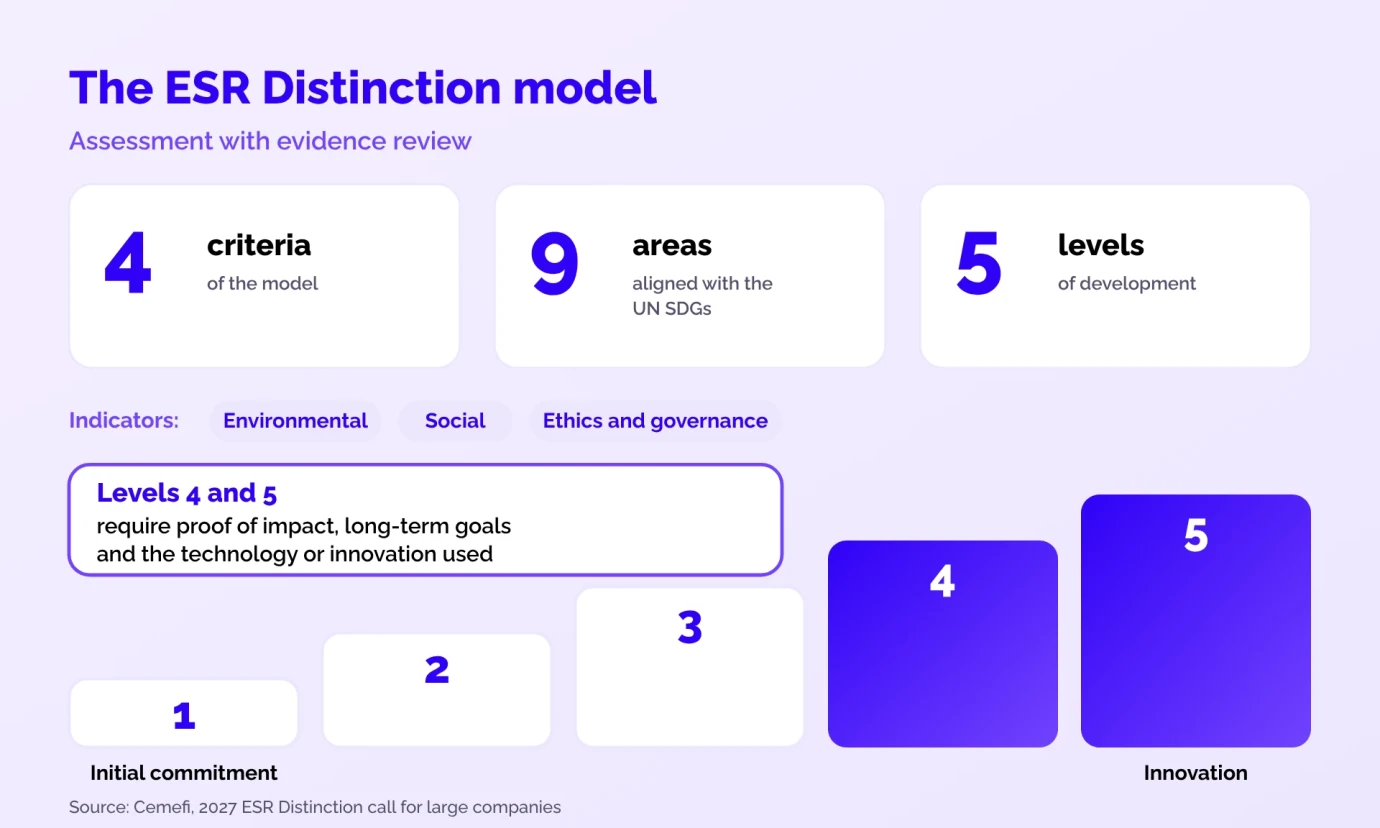
The model has four criteria and nine areas aligned with the United Nations Sustainable Development Goals (SDGs). Its indicators cover the environmental, social, and ethics and governance fronts. Companies fall into five development levels, from initial commitment to innovation. Levels 4 and 5 require proof of impact, long-term goals, and the technology or innovation used.
In practice, the Distinction is not won in the instrument but in the months before it. Cemefi assesses the quality and truthfulness of the evidence, not its quantity. A file without a clear date, without a title or without the signature of the area lead does not meet what Cemefi asks for.
It matters because it puts social responsibility and sustainability evidence into an external process, with levels, an evaluating committee and feedback, that renews every year. The benefit that Cemefi's sources support is operational: a comparable assessment of your practices and a one-year brand-use license.
The license lasts one year, and the Carta Dictamen (the official ruling letter) is the only official document that certifies the distinction; the statuette does not endorse it. To renew, the company must apply before the Carta Dictamen expires, and Cemefi grants no extensions for use of the logo. According to a Corresponsables article published ahead of the 2026 event, Cemefi announced it would grant the 2026 ESR Distinction to 1,093 large companies. It is a pre-event article, not the final list.
None of the Cemefi pages we reviewed promises cheaper credit or contracts for holding the Distinction. That is why this article does not promise it either.
The uncomfortable truth is that the instrument closes in December, but emissions evidence is built throughout the year. Whoever starts collecting energy invoices and supplier data in November arrives with an incomplete inventory. It is Bono's reading, not a Cemefi statement.
The conflict shows up between areas. Procurement does not have supplier data, Operations keeps consumption by plant in its own files, and Finance needs an invoice behind every figure. The sustainability director ends up in the middle, assembling the evidence by hand.
Our position is that the Distinction should come from data the company already uses all year, not from a paperwork exercise every fall. Data has to lead somewhere: the same emissions inventory should serve the Distinction, CDP and SBTi.
The 2027 call for large companies has four steps: registration, application, payment and instrument. All four must appear complete on the Cemefi Platform: Registration "Confirmed", Application "Confirmed", Payment "Paid" and Instrument "Released". If one is missing, participation is incomplete.
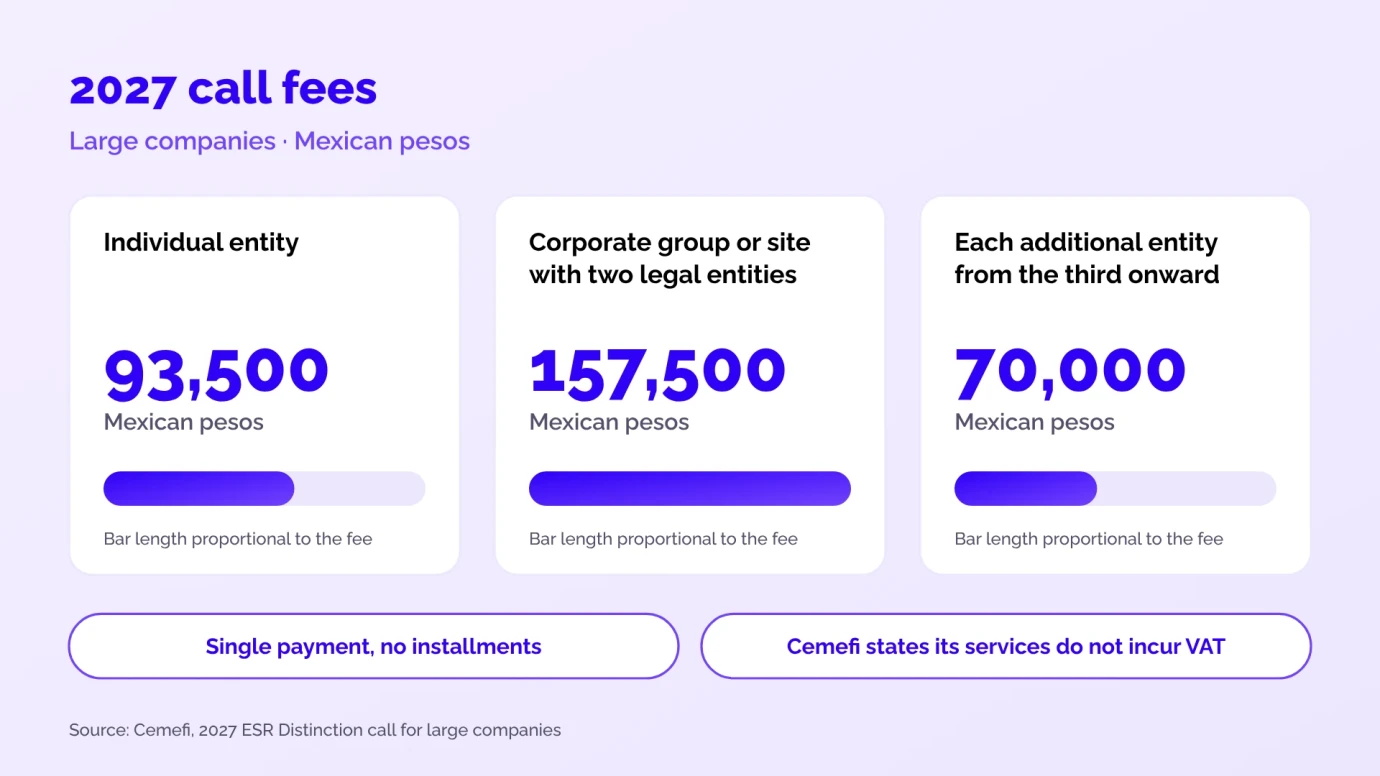
The fee for an individual entity is 93,500 Mexican pesos. A corporate group or site with two legal entities pays 157,500 pesos, and each additional entity from the third onward pays 70,000 pesos. Payment is made in a single installment, with no partial payments.
Start with the greenhouse gas (GHG) emissions inventory. Cemefi's emissions sheet assesses whether the company measures its carbon footprint, sets reduction targets and manages its emissions with recognized standards. It recommends building the inventory under the Greenhouse Gas Protocol (GHG Protocol) and setting a baseline with a reference year.
The sheet's best practices include measuring all three scopes. Scope 1 is direct emissions, Scope 2 is energy and Scope 3 is the value chain. They propose science-aligned reduction targets, with the Science Based Targets initiative (SBTi) as the reference. They also mention inventory verification by accredited bodies under ISO 14064-3. Reference metrics include progress toward SBTi targets, clean energy share and the CDP score.
An important limit: the sheet does not define what each level from 1 to 5 requires. It lists practices and reference metrics, not obligations. Before deciding whether you need Scope 3 or external verification for your target level, confirm the criterion with [email protected].
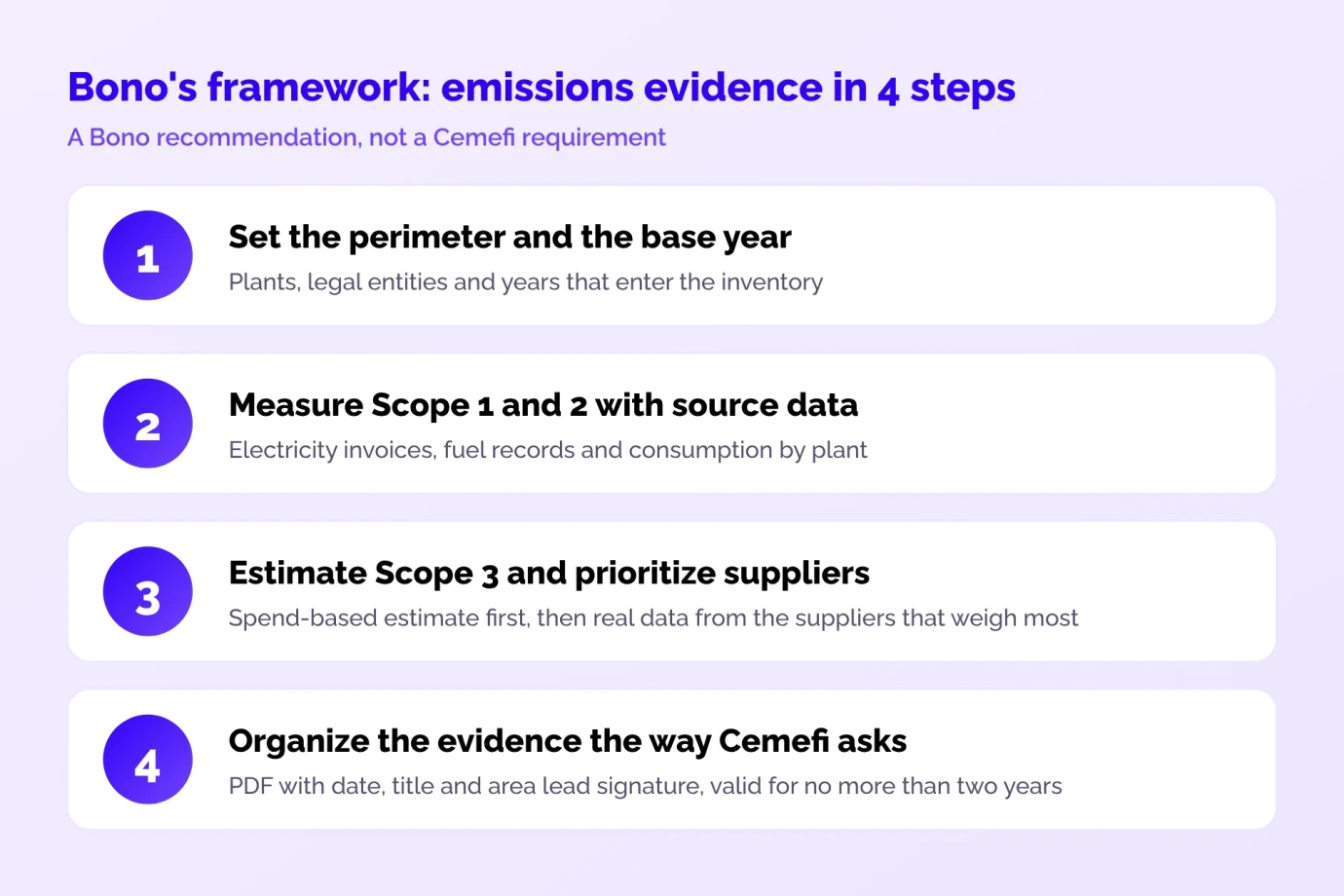
Bono recommends this order to arrive at the assessment with data you can defend. It is a Bono recommendation, not a Cemefi requirement.
Define which plants, legal entities and years enter the inventory, and choose the reference year. If you apply as a group, it helps for the perimeter to match the entities registered on the Cemefi Platform. With that agreement you avoid arguing in December about what counts and what does not.
Gather electricity invoices, fuel records and consumption by plant, and calculate with recognized emission factors. Excel is an audit risk, not a measurement tool. Bono's Carbon Accounting platform calculates Scope 1, 2 and 3 in one place, so Operations, Procurement and Finance work from the same number.
Start with a spend-based estimate to see where emissions concentrate, then ask the suppliers that weigh most for real data. A spend-based Scope 3 is good for starting; it does not capture what your suppliers reduce. Bono's supply chain app sends the questionnaires to suppliers and collects their answers, instead of leaving that work in emails and loose spreadsheets.
Cemefi accepts evidence in PDF, with a clear date, title and the signature of the area lead, and with a validity of no more than two years. The inventory, the calculation record and the source documents must meet that format from the moment they are generated, not when the deadline arrives. An 80-page PDF describes the problem; a data infrastructure moves it. Our recommendation is for the lead to sign every document at the close of each quarter.
The individual fee in the 2027 call is 93,500 Mexican pesos. A corporate group or site with two legal entities pays 157,500 pesos, and each additional entity from the third onward pays 70,000 pesos. Payment is made in a single installment, with no partial payments. Cemefi states that its services do not incur VAT.
The brand-use license lasts one year. The Carta Dictamen is the only official document that certifies the distinction, and the statuette does not endorse it. To renew, the company must apply before the Carta Dictamen expires, because Cemefi grants no extensions for use of the logo.
Cemefi asks for legally constituted entities in Mexico. Companies with more than 100 employees in commerce, services, agriculture and transport, or more than 250 in manufacturing, construction and mining, are considered large. Companies whose line of business is the sale of war products or tobacco, or betting centers, cannot participate.
Cemefi's emissions sheet includes Scope 3 among its best practices, but it does not define what each level requires. Confirm with Cemefi the level you are aiming for. If you decide to measure it, Bono calculates Scope 1, 2 and 3 and requests data from your suppliers, so the inventory reaches the instrument complete.
Every application cycle with an emissions inventory that lives in an unvalidated Excel file is a cycle in which your evidence depends on one person's memory.
Prefer to talk it through directly? Book 15 minutes with Bono. We show you where to start before the call ends.