

Emissions reduction

What is a renewable energy PPA?

What a renewable energy PPA is, how physical and virtual PPAs differ, and how it counts in your market-based scope 2.

  • By Diego Ezquerro
ppa-energia-renovable-hero-en

The essentials in 30 seconds

  • A PPA fixes the price and term of your energy, but on its own it does not make your Scope 2 renewable.
  • In a virtual PPA there is no physical delivery of electricity: the parties exchange the price difference.
  • To report the energy as renewable, you need to receive and retire the project's certificates.
  • In Mexico, the 2025 Electricity Sector Law changed the schemes, and the permit migration calendar is still open.

Introduction

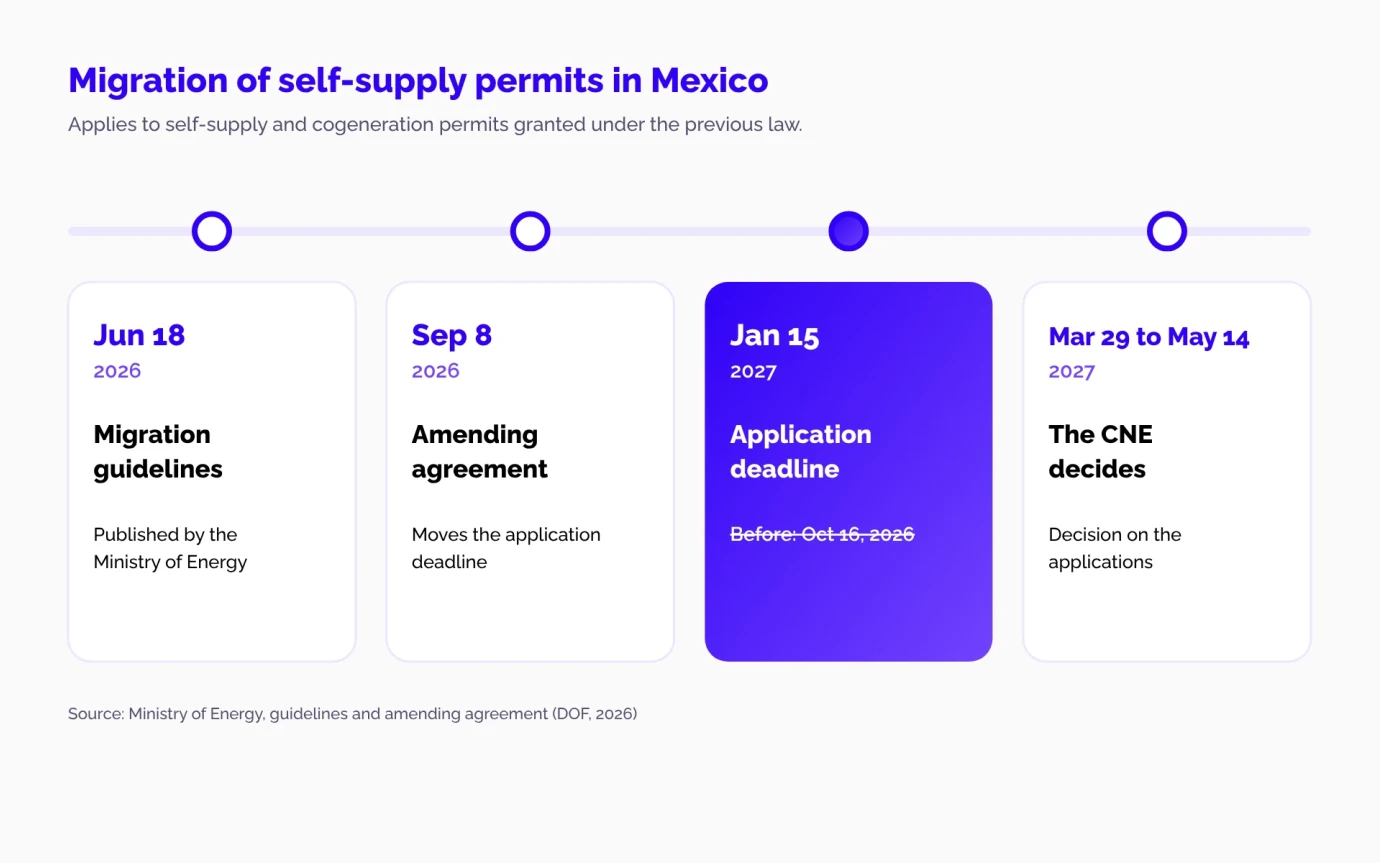
The guidelines from the Ministry of Energy set October 16, 2026 as the deadline to submit the migration application for self-supply permits. The amending agreement, published on September 8, moved it to January 15, 2027. If you buy energy from a plant with that type of permit, you should review the calendar.


A renewable energy PPA looks more like a regulated contract than an ordinary energy purchase. The legal framework, the calendar and the destination of the certificates change what you sign and what you can report afterwards.


This article answers five questions. What a renewable energy PPA is, why it matters, how it counts in Scope 2, how a physical PPA differs from a virtual one, and what changes in Mexico, Colombia and Chile. Let's start with the definition.
What is a renewable energy PPA?

A renewable energy PPA (power purchase agreement) is a long-term contract in which a renewable generator sells its energy to a buyer at an agreed price. An IRENA report on corporate sourcing of renewables describes it as a long-term contract with an independent power producer or a utility.


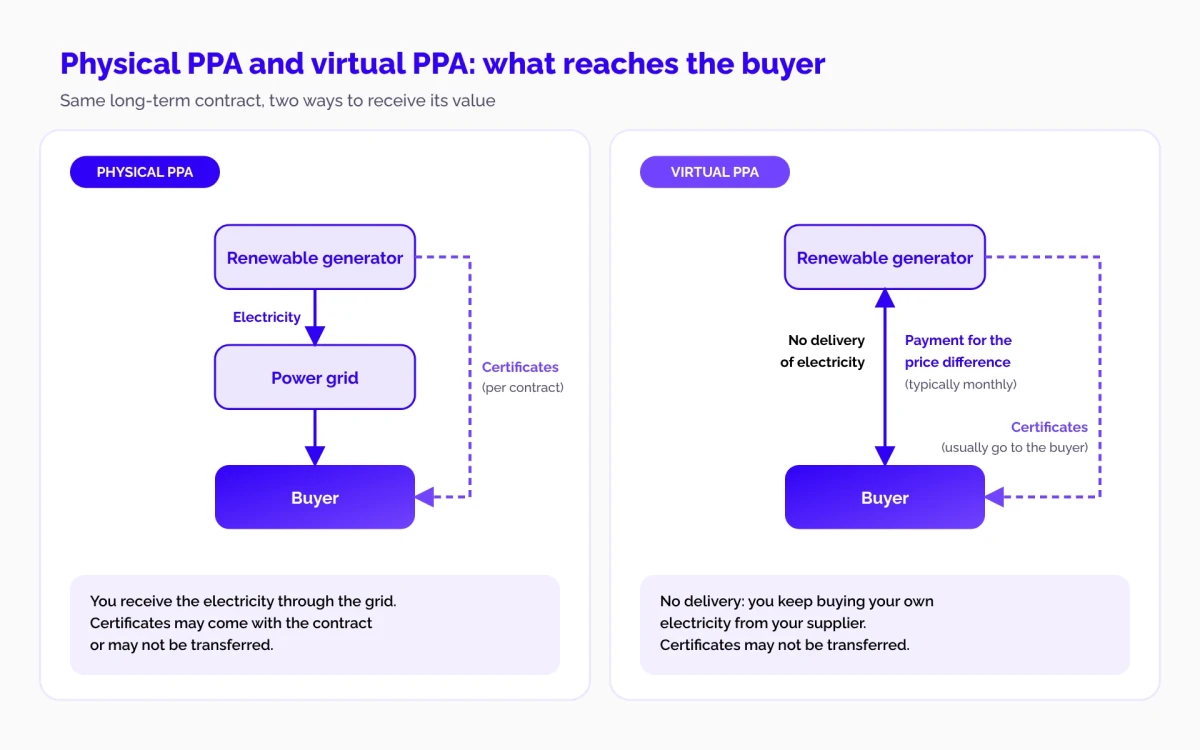
In its physical version, according to the US EPA, the customer receives the electricity through the grid and buys it at a fixed price for an agreed term. In that country, these agreements usually last 10 to 20 years. The buyer does not build the plant: a third party builds, maintains and operates it, on the customer's site or off it.


In practice, Procurement or Finance negotiates the contract, with price and term on the table. Sustainability finds out when it is time to report, and that is when the question comes up: does that energy count as renewable in the inventory? If the contract did not transfer the certificates, the answer may be no.

Why does a renewable energy PPA matter for your company?

It matters because it fixes the price of part of your electricity for several years and because it changes what you can report in your inventory. The first reason is for Finance. The second is for Sustainability.


According to the EPA, a financial PPA covers both parties' price risk: the buyer gains cost predictability and the developer gains long-term revenue. That benefit has a downside. When the market price falls below the agreed price, the buyer pays the difference.


The market is already large. BloombergNEF counted corporate clean energy deals of 55.9 GW in 2025, 10% less than the previous year's record. The Americas were the only region where off-site contract volume did not fall, with a record 29.5 GW in the United States. The report's public summary has no figures for Latin America.


Our position at Bono is that a PPA is decided jointly by Finance and Sustainability from the first meeting. The uncomfortable truth is that many contracts are signed on price and nobody checks whether they transfer the attributes of the energy.

How does a renewable energy PPA count in Scope 2?

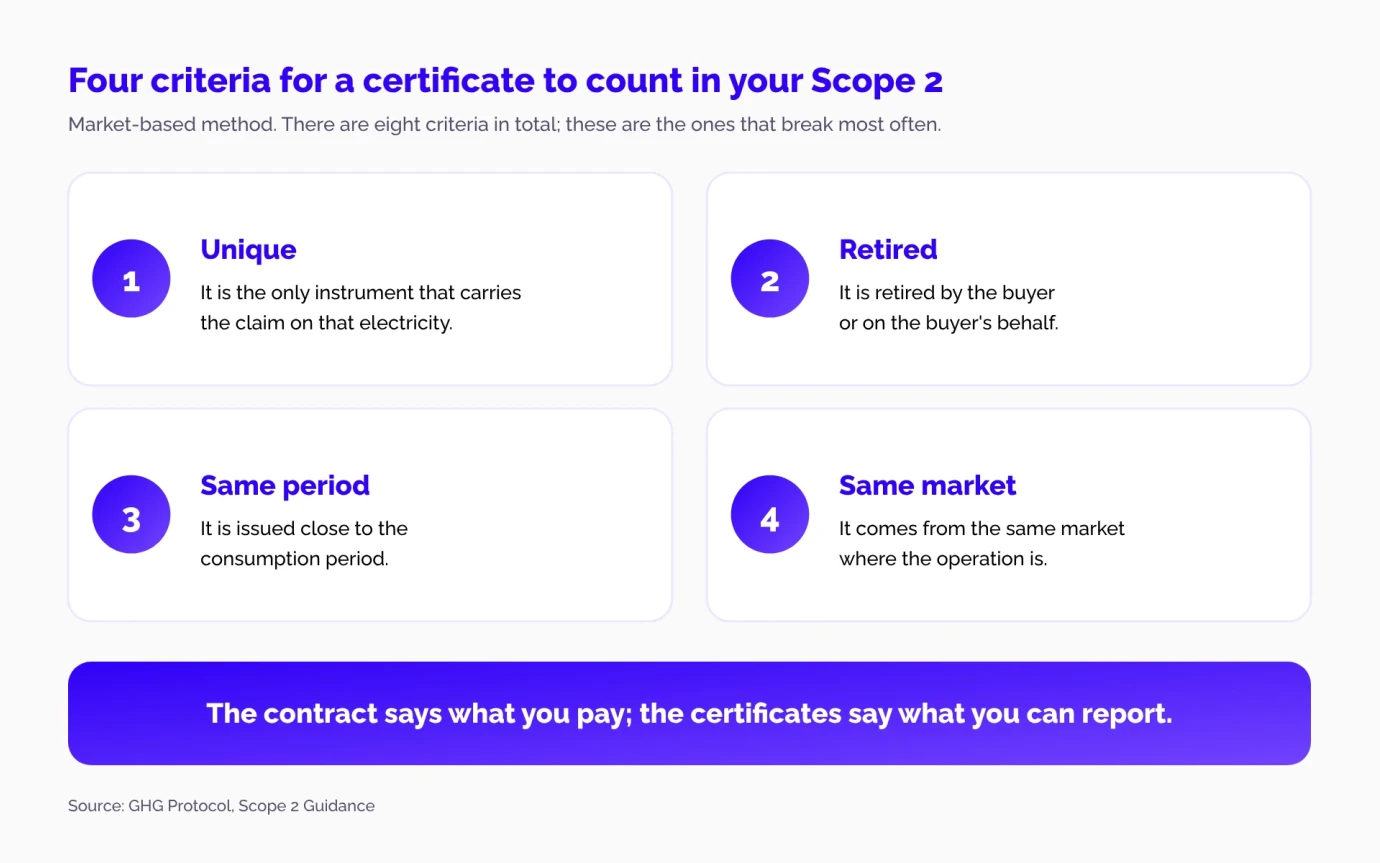
A PPA counts in Scope 2 (indirect emissions from purchased electricity) under the market-based method. It counts only if the contract transfers the attributes of that energy to the buyer and meets the GHG Protocol quality criteria. The contract says what you pay; the certificates say what you can report.


The GHG Protocol Scope 2 Guidance asks companies to report Scope 2 with two methods, location-based and market-based. The market-based method uses the emission factor of the electricity the company chose to buy, based on contractual instruments. The guidance states that these instruments are not carbon offsets.


For an instrument to count, it must be the only one carrying the claim on that electricity and must be retired by the buyer or on its behalf. It must also be issued close to the consumption period and come from the same market where the operation is. There are eight criteria in total; these four are the ones that break most often with a misread contract.

ppa-energia-renovable-criterios-ghg-protocol-en

There is one more detail. The guidance includes direct contracts among the instruments and states that they can be for low-carbon, renewable or fossil generation. That is why a PPA, by itself, does not guarantee that the energy is renewable. You need to read which source and which attributes it includes.


In a virtual PPA, the EPA explains that certificates usually go to the customer by contract, but may not be transferred. To claim renewable energy use, the buyer must own the project's certificates or have them retired in its name. A PPA fixes the price; renewable Scope 2 is earned with the attributes.

What is the difference between a physical PPA and a virtual PPA?

In a physical PPA you receive the project's electricity through the grid. In a virtual PPA you do not: you keep buying your energy from your supplier and the contract settles the difference between an agreed price and the market price, normally every month.


That settlement runs both ways. If the market price ends up below the agreed price, the buyer pays the difference. If it ends up above, the buyer receives it. That is why the virtual PPA works as a price hedge, and not as a way of supplying yourself.


PPA typeWhat is exchangedElectricity deliveryCertificatesWhat to check before signing
Physical off-siteEnergy from a project, delivered through the grid, at a fixed priceYes, through the gridMay come with the contract or may not be transferredWho retires the certificates and in which market
Physical on-siteEnergy from a third-party plant located on your siteYes, on siteMay come with the contract or may not be transferredHow much of your consumption it covers and who owns the certificates
Virtual (financial)The difference between the agreed price and the market priceNoUsually go to the buyer by contract, but may not be transferredWhere you buy the electricity you do consume and who keeps the certificates


The table shows that the contract type changes how the energy arrives, but the certificate question stays open in all three cases. Bono measures Scope 2 for the companies it works with, and that number is the baseline against which any energy contract is reviewed.

How do I review a renewable energy PPA before signing it?

Review it against your inventory, not just against your tariff. Bono's Contract-Inventory Framework has four steps and connects what Finance signs with what Sustainability reports.

  1. Measure your electricity consumption by site

    A PPA is sized against what you consume. Without consumption by plant or workplace, the contract is signed on an estimate. Bono measures Scope 2 for the companies it works with, and that inventory is the starting point for knowing what share of your electricity you want to cover.

  2. Choose the contract type your operation can sustain

    Define whether you need to receive the energy or hedge the price. A physical on-site PPA solves supply for a specific plant. A virtual PPA hedges the price, but leaves your supply contract intact. Each country and each market limits which of the options you can sign.

  3. Confirm who keeps the certificates

    Ask that the contract state who receives the certificates, who retires them and in which period. Check it against the GHG Protocol criteria. If the generator keeps them, the price may be good and your Scope 2 does not change.

  4. Record the contract in your inventory

    Each instrument must be documented with its period, its market and its volume. Excel is an audit risk, not a measurement tool. An auditor or a bank will review the full chain, from the invoice to the retired certificate.

How does a renewable energy PPA apply in Mexico, Colombia and Chile?

It depends on each country's framework. Mexico redefined its schemes in 2025, Colombia lets certain users agree prices freely, and Chile lowered the minimum size to choose free pricing.


In Mexico, the Electricity Sector Law (Ley del Sector Eléctrico) was published in the Official Gazette (Diario Oficial de la Federación) on March 18, 2025. The text of the law does not use the word PPA. It defines the electricity hedging contract (contrato de cobertura eléctrica), an agreement between market participants to buy and sell energy at a future date (article 3, section XI).


It also defines self-consumption (autoconsumo), the output of a plant of 0.7 MW or more, with a preference for renewable energy (article 30). Above that threshold, every plant needs a generation permit (article 19).


Companies with self-supply and cogeneration permits granted under the previous law can migrate to the figures of the new law under the guidelines published on June 18, 2026. After the September 8 amendment, applications are submitted until January 15, 2027, and the CNE rules between March 29 and May 14, 2027.

ppa-energia-renovable-calendario-migracion-autoabastecimiento-en

The real conflict shows up inside the company. The energy contract lives in Operations or Procurement, the permit in Legal and the inventory in Sustainability. Each area holds one part of the data, and almost nobody has the full calendar.


In Colombia, CREG Resolution 131 of 1998 defines the unregulated user as one who buys electricity at prices freely agreed with the seller, as long as its demand exceeds a threshold set by the CREG. That user must be represented by an energy retailer (comercializador) in the wholesale market (article 4). Our reading is that this price freedom is what allows a long-term contract to be negotiated. 


In Chile, Exempt Resolution 58 of the Ministry of Energy, published on December 9, 2024, lowered the connected power limit for choosing between regulated tariff and free pricing from 500 to 300 kilowatts. Its recitals call customers above 5,000 kilowatts free customers.


Whoever opts for free pricing must stay in that regime for four years and notify their distribution utility 12 months in advance.

Frequently asked questions

How long does a renewable energy PPA last?

There is no single duration. According to the EPA, physical PPAs in the United States are usually 10- to 20-year agreements. In Latin America the term depends on the contract and the market, so define it with your legal advisor and your energy retailer before signing.

Does a virtual PPA count as renewable energy in my report?

Only if you receive the project's certificates and retire them in your name, and if they meet the GHG Protocol criteria. Without the certificates, the virtual PPA works as a price hedge. Bono measures your Scope 2, which is the number you check that contract against.

What risks does a PPA have for the buyer?

Three. Price: if the market falls below the agreed price, you pay the difference. Term: the contract lasts years and your consumption may change. Reporting: if the certificates do not arrive in your name, your Scope 2 does not reflect renewable energy.

Can a company in Mexico sign a PPA today?

It depends on the scheme. The law defines the electricity hedging contract between market participants and self-consumption from 0.7 MW, and each figure has its own permit rules. Before signing, confirm with a regulatory advisor which one applies to you and how your current permit is affected.

Actionable takeaways

  • Ask Procurement and Finance to have Sustainability review any PPA before signing, not after.
  • Measure your electricity consumption by site before deciding how much energy you want to contract.
  • Require the contract to state who receives and who retires the project's certificates.
  • Check that each certificate meets the GHG Protocol criteria: unique, retired in your name, from the same market and from the same period.
  • If you hold a self-supply permit in Mexico, schedule the migration application before January 15, 2027.
  • Document each instrument in your inventory with period, market and volume.

The contract comes before the inventory

Every energy contract signed without checking who keeps the certificates is a reporting period in which your renewable electricity may not show up in your Scope 2.


Want to see it with your data? Book 15 minutes with Bono. We will show you where to start before the call ends.

Book 15 minutes with Bono

Update cookies preferences